Hairpins, Combs, and Ribbons: Three Ways an Accessory Changes a Look
See how a hairpin, comb, or ribbon changes a hairstyle’s visibility, placement, and emphasis, so you can choose an accessory that suits the effect you want.
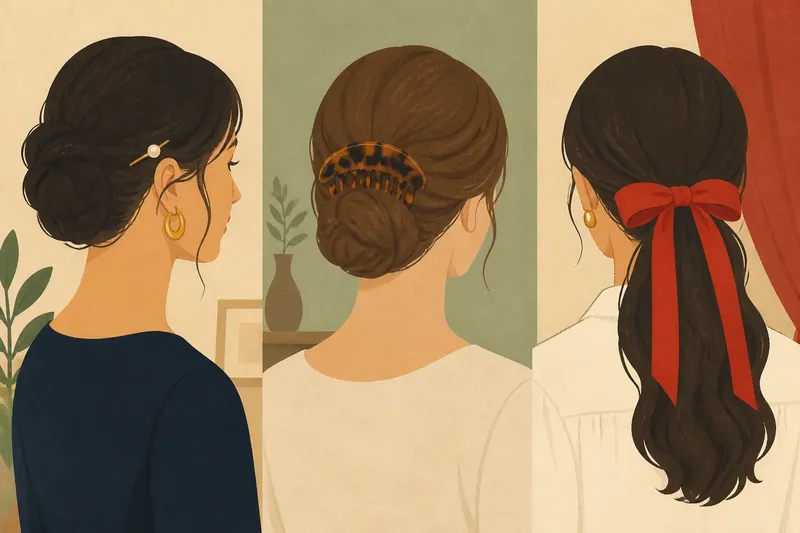
The most common mistake with a hair accessory is choosing its decoration before deciding where the eye should go. A hairpin, comb, and ribbon each make a different kind of mark: one can seem almost incidental, one frames a particular area, and one draws a visible line through the hairstyle.
That difference matters whether you are dressing for a family gathering, arranging hair for a portrait, or choosing what to wear with a plain shirt. Think of each accessory in terms of visibility, placement, and visual emphasis.
A hairpin adds a small point of emphasis
A hairpin usually has the lowest visual profile of the three. A plain metal pin may disappear into dark hair, while a pearl-tipped or enamel pin gives the eye a small, deliberate stopping point. Its effect depends less on covering an area than on marking a precise place.
Placement can make that mark feel practical, ornamental, or both. A pin tucked behind one ear draws attention toward the side of the face. A pin at the crown can give a gathered style a neat focal point, while several pins arranged along a part make a more graphic line. The same pin can read differently depending on whether it is partly concealed or clearly displayed.
Think about scale and contrast together. A tiny pin in a color close to the hair can look quiet; a bright pin against dark hair is easier to notice even if the ornament itself is modest. If you wear glasses, earrings, or a patterned collar, a single pin may add interest without competing with every other detail.
Say you are wearing a simple navy dress and have swept one side of your hair back. A small gold hairpin just above the ear could echo the warm metal of your earrings and keep attention near your face. If you want the hairstyle itself to recede, choose a pin close in tone to your hair and conceal most of its length.
Hairpins suit moments when you want to indicate a specific detail rather than decorate the whole hairstyle. They can also be useful when a comb would feel too prominent or a ribbon would introduce a strong line. It is not worth arranging many tiny pins into a complicated pattern if the design only reads from very close up; one clearly placed pin often makes the intention easier to see.
A comb frames a section and makes structure visible
A comb has more visual weight than a single pin because its teeth and upper edge occupy a defined area. It often sits at the edge of a hairstyle, where it can show how hair has been gathered, parted, or swept into place. That position connects the comb to the structure of the style rather than making it seem simply placed on top.
At the back of a low bun, a comb can create a visible border or decorative cap. At the side of a twist, it can emphasize the direction of the hair. A comb placed high near the crown tends to read more prominently, while one tucked lower may be seen mainly from behind or in profile. Consider the views from which people are likely to see you, not just the front-facing mirror.
Materials shape the impression. A tortoiseshell-style comb can blend into brown hair and suggest a softer finish. Bright metal, colored stones, or a strong silhouette announces itself more clearly. The teeth may be mostly hidden, but the ornament across the top still forms a distinct shape against the hair.
A comb also changes the balance of a hairstyle. A broad ornament can make a smooth, simple arrangement feel more finished, while an elaborate comb may compete with curls, a patterned neckline, or large earrings. If the comb is the main accent, leave other details quieter; if it supports the outfit, look for a shape or color that echoes something you are already wearing.
Before choosing one, check how it sits in your hair rather than judging only by its appearance in your hand. Hair texture, thickness, and the way a style is secured affect whether a comb feels stable and sits at the angle you want. Follow the maker’s instructions and adapt the choice to your hair and hairstyle.
A ribbon draws a line through the hairstyle
A ribbon is usually the most visible choice because it introduces both color and a flowing shape. Tied around a ponytail, it creates contrast at the base. Woven through a braid, it becomes a line that follows the hair’s movement. Tied into a bow, it adds a distinct silhouette that can feel playful, crisp, or ceremonious depending on its color and finish.
Unlike a pin or comb, a ribbon can extend beyond the hairstyle. Long tails move as you turn your head and can connect the hair to a collar, scarf, or dress. A short, compact bow keeps the accent close to its placement. Length and width influence not only how much ribbon is seen but also how the hairstyle occupies space.
Color is part of the ribbon’s shape. A ribbon close to the hair color can read as a subtle band, while a contrasting shade makes the tie easy to notice. A printed or striped ribbon adds another pattern; with a busy outfit, a solid color may create a clearer accent. The ribbon need not match every other item exactly. Repeating one color from a shirt, bag, or earring can be enough to connect the look.
Imagine you have a white blouse and a plain ponytail for an afternoon gathering. A narrow red ribbon tied with short tails would add a clear accent without changing the hairstyle’s outline very much. A wider ribbon in the same color, tied into a large bow, would shift emphasis toward the back of your head and make the accessory more prominent.
Ribbons suit moments when you want color, movement, or a deliberately decorative finish. They can also soften a sleek hairstyle or make a familiar braid feel more composed. If you want the accessory to recede, choose a narrow ribbon in a close shade and keep its ends contained rather than expecting a bright bow to remain visually quiet.
How do you choose between a hairpin, comb, and ribbon?
Which accessory is least noticeable?
A plain hairpin that blends with your hair is usually the quietest option. A comb can also recede if its upper edge is small and close in tone, while a contrasting ribbon is more likely to attract attention because it creates a visible band or line.
Which accessory works best as a focal point?
A decorative comb makes a strong focal point when you want to emphasize a gathered section or the back of a hairstyle. A bright hairpin focuses attention on a smaller spot, while a ribbon can claim more visual space through its color, bow, or trailing ends.
Where should you place a hair accessory?
Place it where you want the eye to pause: near the ear for a side accent, at the back to frame a bun, or at the base of a ponytail to mark its starting point. Check the placement from the front, side, and back, since a detail that looks balanced in one view may be hidden or crowded in another.
Can you wear a hair accessory with statement earrings?
Yes, but decide which detail should lead. A discreet pin can sit comfortably beside bold earrings; a large comb or bow may feel crowded, especially if both accessories are bright or ornate.
Choose the accessory by the mark you want to make
For a small, precise accent, start with a hairpin. For an ornament that frames a section and makes the hairstyle’s arrangement visible, consider a comb. For a noticeable line of color or a bow that moves with you, choose a ribbon.
Then consider the full outfit and the views that matter: the face in conversation, the side profile in a photograph, or the back of the hairstyle at a gathering. A useful choice does not have to dominate the look. The right hair accessory is the one whose size, placement, and visibility give attention to the detail you meant to show.