The Flawless Image Myth: What Retouching Leaves Behind
The flawless image myth hides how photographs are made. Learn to read retouching cues and see polished beauty images as constructed, not unmediated records.
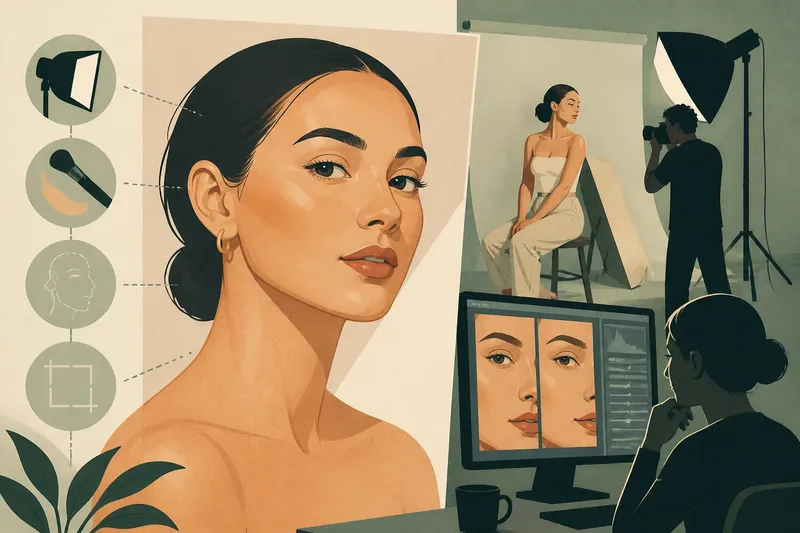
The most common mistake with a polished beauty photograph is to treat its smoothness as evidence that nothing happened between the camera and the page. The flawless image myth makes retouching disappear, leaving viewers to compare their own changing faces with an image that may have been carefully assembled.
A photograph can be beautiful and heavily mediated at once. Over a week, you can build a simple habit of looking at the choices that shape an image: what is lit, softened, removed, emphasized, or cropped. The point is not to catch every edit or condemn polish. It is to recognize the photograph as an artifact with a history of making.
Day one: separate the photograph from the face it presents
Choose a beauty image from a magazine, a cosmetics campaign, or a public social media post. Before zooming in, notice its overall effect: does the skin seem luminous, matte, blurred, or sharply detailed? Then ask what you can actually observe and what you are inferring.
“The skin is smooth” describes an appearance. “The person has no pores” turns that appearance into a claim about a real face. That small distinction matters: the image records a designed presentation, not an untouched encounter with its subject.
Day two: read the light before looking for edits
Lighting can soften texture without digital retouching. A large, diffused light source reduces sharp shadows; a bright reflection can make skin look dewy; a frontal angle can flatten features. Makeup, lens choice, focus, and exposure also shape the result before editing begins.
Look at the highlights on the forehead, cheekbones, and nose. Do they suggest a consistent light source, or does the image feel uniformly bright? Neither cue proves a particular technique. They simply remind you that visual polish can begin on set, long before a retoucher opens a file.
Day three: look for where texture changes
Now inspect the image more closely, if a larger version is available. Compare areas with different kinds of detail: the skin beside the nostrils, the edge of the lips, the hairline, and the fabric near the face. Retouching may leave natural texture in one place while smoothing or rebuilding another.
Watch for details that seem to lose definition at the same time as the skin, or for an edge that looks unusually crisp against a soft surface. Compression, small image size, and screen settings can create similar effects, so treat these as clues rather than a verdict. It is not worth enlarging a low-resolution picture until pixels fill the screen; that often reveals the file’s limits more than the retouching.
Day four: track what the frame leaves out
Cropping is another form of image-making. A tight frame can remove the room, styling tools, other people, or the boundary of a set. It directs attention toward a face while hiding the practical conditions that helped create the finished image.
Consider what lies beyond the visible edges, without inventing a story about it. A seamless backdrop might be a studio sweep; a seemingly natural glow could come from a reflector or carefully placed lamp. The frame shows a selection, not the whole scene.
Day five: follow the image across its versions
If the same photograph appears in a campaign, a retailer’s product page, and a social post, compare the versions. Look for shifts in crop, color, skin detail, and contrast. A close crop may make the face feel more intimate, while a cooler or warmer treatment can change the mood.
Do not assume every difference signals a new retouching pass. Platforms may compress images or display them differently, and a designer may adapt a crop for a particular layout. The useful observation is that the image’s presentation can change as it travels.
Day six: describe the work without turning it into a hunt
Try writing two sentences about one image. In the first, describe what is visible: “The cheek has a broad highlight, and the skin reads as even.” In the second, name what remains uncertain: “The file does not tell me how much comes from lighting, makeup, or editing.” This keeps observation separate from accusation.
Say you choose a cosmetics portrait for this exercise: the background is pale, the cheeks are softly lit, and a small blemish is absent in the final image. You can note those visible facts and consider several possible causes, including makeup, angle, or retouching; the expected result is a more careful description, not a claim about the person’s actual skin.
What can you tell from a polished photograph?
Can you identify retouching from smooth skin alone?
No. Diffused light, makeup, focus, and image compression can all reduce visible texture. Look for several cues together, and keep uncertainty in your description.
Does retouching always mean a face has been reshaped?
No. Editing can adjust color, remove a temporary mark, soften texture, or alter contours, among other choices. The finished image rarely tells you exactly which changes were made.
Why can the same image look different on another screen?
Displays and platform processing can affect brightness, contrast, sharpness, and color. A difference in appearance does not by itself reveal what happened during editing.
How can you discuss an image without judging the person in it?
Describe the photograph’s visible choices rather than making claims about the subject’s body or habits. “The image has softened skin texture” is more grounded than guessing what the person looks like outside the frame.
Day seven: carry one useful question into daily looking
Choose a question to keep: “What did this image make visible, and what did it leave outside the frame?” Use it with beauty advertising, portraits, and personal photos. The flawless image myth weakens when polish is understood as a set of choices rather than a natural standard a face is meant to meet.
There is no need to inspect every image for hidden edits or to treat any smooth surface as deceptive. A polished photograph can still communicate style, mood, and craft. Remembering that it is made—through light, framing, styling, and sometimes retouching—lets you appreciate those choices without mistaking them for an unmediated record.